


How to Style Pakistani Khaddar Suits for Fall and Winter in the USA
The first cold week of the year always catches people off guard. Suddenly the cotton pieces you have been living in since April feel thin, and the heavy winter wear feels like overkill for a day that is only slightly chilly.
This is the gap khaddar was made for, and it is why it shows up in Pakistani wardrobes the moment the weather turns.
Khaddar is a handwoven cotton with more weight and texture than regular lawn or cotton. It holds warmth without being bulky, which makes it genuinely useful for the long stretch of autumn and mild winter that most of the USA gets. If you are in Chicago in January you will need more, but for everywhere in between, this is the fabric that carries you.
Among pakistani suits generally, khaddar tends to be underrated by people who have not worn it. It photographs plainly and looks its best in person, where the weave and the drape actually register. Pakistani co ord sets in khaddar are especially good, because the extra weight makes the matched silhouette hang beautifully.
Once you have worn khaddar suits through a cold season, going back to thin cotton in November feels wrong.
What Makes Khaddar Different
The short version is the weave. Khaddar is handwoven, which gives it a slightly irregular texture and a heavier hand than machine woven cotton. That texture is the whole appeal.
It traps a bit of warmth without needing a lining. It drapes with more structure, so pieces hold their shape rather than clinging. And it takes dye and embroidery beautifully, which is why so many winter collections lean on it.
A 2 piece khaddar suit is usually shirt and trousers, sometimes with a matching or contrasting dupatta sold separately. Two pieces is the practical starting point because it leaves your layering options open.
Pakistani linen suits sit in a similar weight class and are worth considering alongside khaddar if you prefer a smoother finish. Linen has more crispness, khaddar has more softness and body.
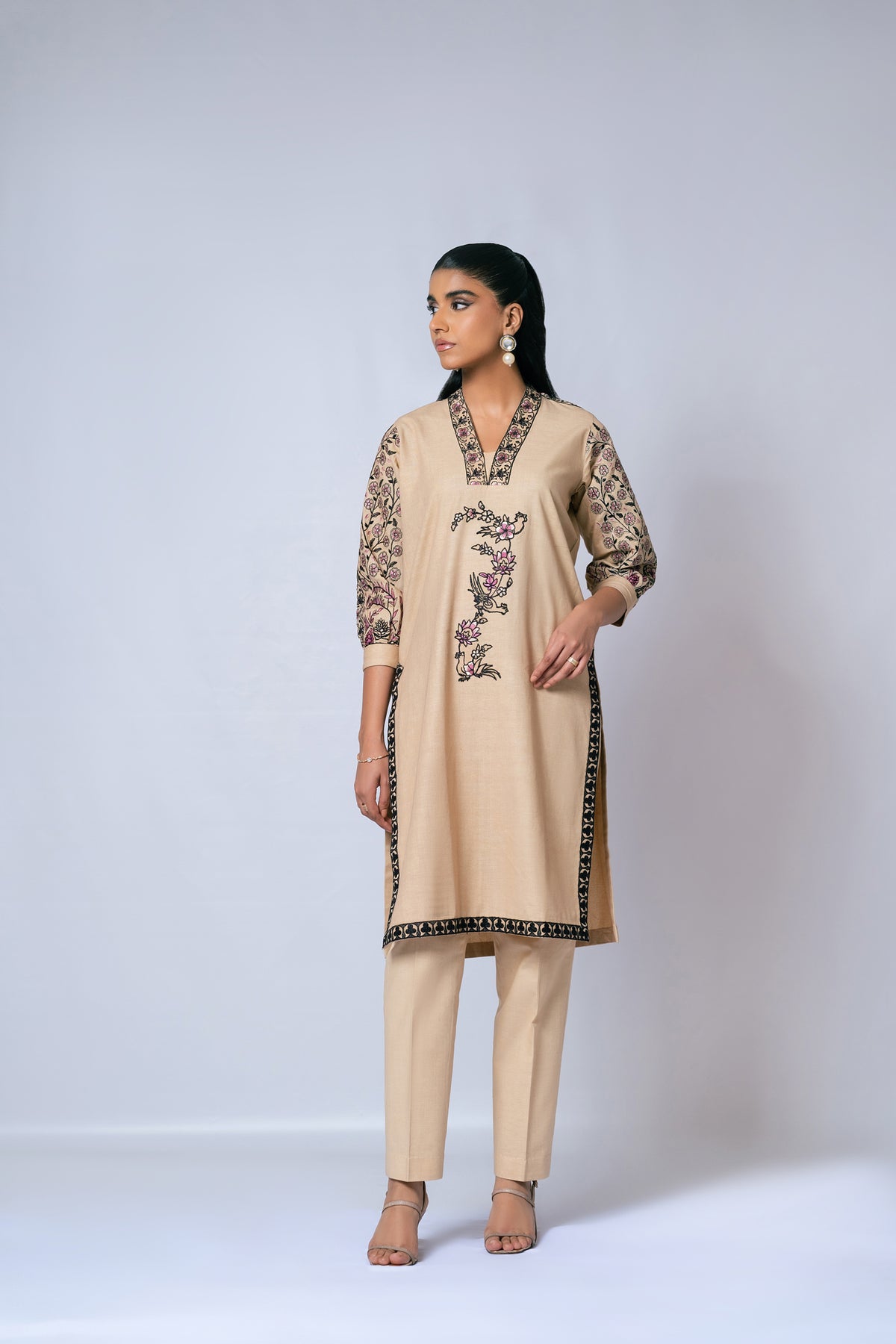
Pakistani embroidered suits in khaddar are where the fabric really shows off, because the texture gives the thread something to sit against.
Layering Without Losing the Silhouette
The mistake most people make with winter South Asian wear is layering on top and killing the line of the outfit.
A better approach is to layer thin and close. A fitted long sleeve top under a khaddar kurta adds real warmth and disappears completely under the fabric. Nobody sees it and you stay comfortable.
For outerwear, a long structured coat in a neutral works far better than a puffer. It follows the vertical line of the kurta and trousers rather than fighting it. Camel, charcoal, and black all work with almost every khaddar colour.
A heavy shawl is the traditional answer and it still works, particularly with pakistani suits for women in deeper winter tones. Drape it long rather than wrapping it tight, and let the ends fall.
The rule is simple. Add warmth under or over, but never in a way that shortens or widens the silhouette you started with.
Colours That Carry the Season
Khaddar looks its best in colours that have some depth to them, which happens to suit autumn and winter perfectly.
Rust, olive, deep mustard, charcoal, and aubergine all read rich in this fabric. Lighter shades work too, but the texture means warm neutrals like oat, sand, and stone hold up better than bright whites, which can look flat.
If you are building a small winter capsule, two neutrals and one colour is a sensible ratio. The neutrals go with everything you already own, and the colour piece is the one you reach for when you want to feel like you made an effort.
Embroidery in a tonal thread, meaning the same colour family as the fabric, is the most versatile option. It gives you detail without committing you to a specific occasion. Contrast embroidery is beautiful but narrows where you can wear the piece.
Quick Styling Notes
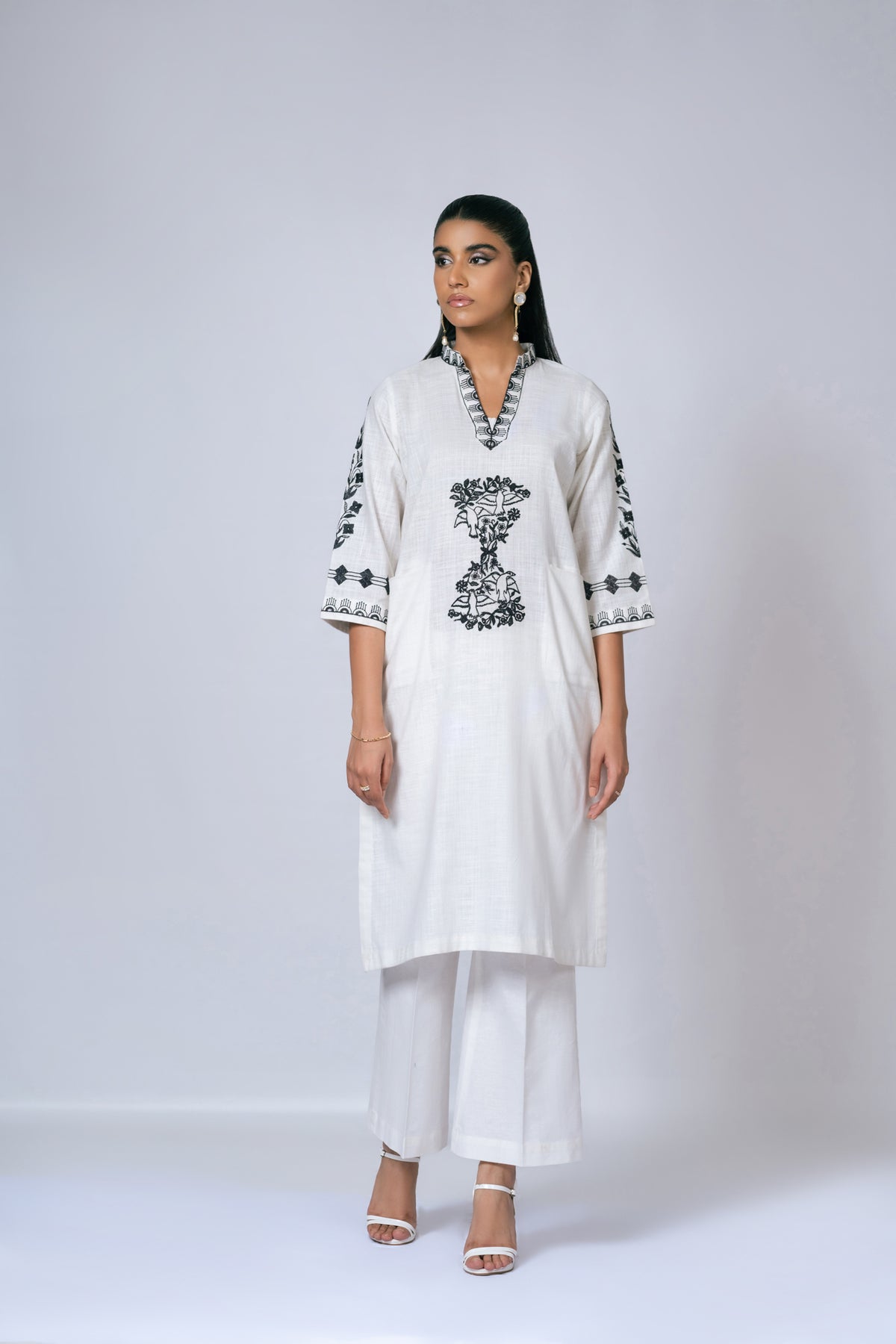
For a cold weekday, wear a khaddar co ord in a neutral with a thin thermal underneath and ankle boots. Skip the dupatta and add a long coat on the way out.
For a family gathering, choose an embroidered khaddar suit, add a wool shawl in a contrasting texture, and keep the jewellery to gold studs or small jhumkas.
For running errands, a plain khaddar kurta over jeans works better than people expect. The weight of the fabric stops it from looking like an afterthought.
For an evening event, deeper tones like aubergine or charcoal with tonal embroidery, paired with a velvet or silk dupatta. The texture contrast does the work.
For layering in transitional weather, a sleeveless long jacket over a khaddar suit adds warmth without bulk and keeps the whole line long.
Conclusion
Khaddar is one of those fabrics that makes complete sense the moment you own a piece and never quite translates in a product photo. It is warmer than it looks, softer than it sounds, and it handles a whole season of real wear without losing its shape.
If your winter wardrobe currently swings between too thin and too heavy, this is the middle ground you have been missing.
The Parvaaz collection has khaddar pieces cut for exactly this kind of weather, in the deeper colours the fabric wears best. You can see what is currently in stock at khatepoesh.
If you are unsure whether a piece will be warm enough for where you live, or how a colour will sit against your skin tone, send the team a message. They will tell you honestly, even if the answer is that a different piece would suit you better.
Frequently Asked Questions
Is khaddar suitable for fall and winter weather in the USA?
Yes, for most of the country. Khaddar is a heavier handwoven cotton that holds warmth without bulk, which makes it ideal for autumn and mild to moderate winters. In very cold regions you will want to layer underneath or add a coat over the top.
Can embroidered khaddar suits be worn to formal events?
Absolutely. Embroidered khaddar in a deeper tone, paired with a silk or velvet dupatta and simple jewellery, works well for dinners, family functions, and semi formal occasions. Tonal embroidery keeps it versatile, while contrast embroidery reads more dressed up.
What is the difference between khaddar and regular cotton fabric?
Khaddar is handwoven, which gives it more weight, texture, and structure than regular machine woven cotton. It holds warmth better and drapes with more body, whereas standard cotton and lawn are lighter and better suited to warm weather.
How can Pakistani khaddar suits be styled for everyday wear?
Keep it simple. A khaddar co ord in a neutral colour with flat boots and no dupatta reads completely everyday. A plain khaddar kurta also works over jeans. The weight of the fabric means it looks intentional even when you have made very little effort.